We earn commissions from qualifying purchases through Amazon links. Affiliate disclosure.
On this page
What you gain
- Self-propelled drive can reduce pushing effort
- Weight and grip matter on uneven ground
What to check
- Follow the manufacturer’s slope limits
- No walk-behind mower suits every slope
For most homeowners, the more practical and most practical hill mower is a well-balanced self-propelled cordless model with enough grip and torque for regular weekly mowing. For smaller or lighter-duty hilly lawns, a lighter push mower can still work well. And for steep, rough, or uneven terrain, the smartest answer is often to avoid forcing a basic mower into a job it is not designed to do.
Quick picks
| Model | Linked version | When to compare it |
|---|---|---|
| EGO LM2135SP | 7.5Ah battery + rapid charger | Drive assistance for lawns within its manual’s slope limit |
| Greenworks 25322 | 16-inch push mower; 40V 4Ah battery and charger | Compact push option for gentle, manageable ground |
| WORX WG779 | 14-inch deck / 13-inch cut; two 20V 4Ah batteries and charger | Narrow push option for tight lawns with gentle slopes |
| Greenworks LMF414 / 2515602 | 21-inch self-propelled mower; 40V 5Ah battery and charger | Alternative self-propelled kit; compare total cost |
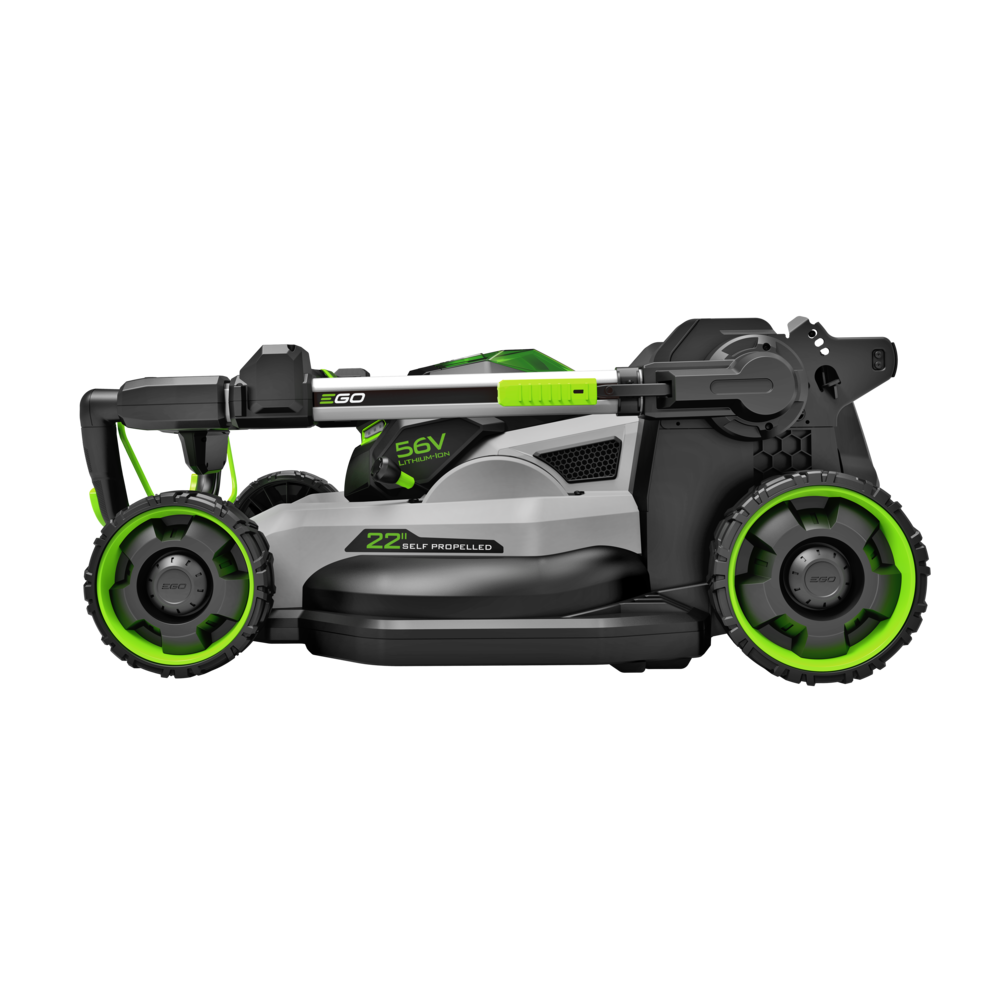
Start here: go straight to Best Self-Propelled Lawn Mowers if your main issue is traction and fatigue, open the EGO LM2236SP review if you want a premium hill-friendly cordless option, or compare Best Lawn Mowers for Large Yards if your property is both sloped and expansive.
What matters most on hilly lawns?
Hills change the mowing job in three ways. First, they punish weak traction and inconsistent self-propel systems. Second, they make heavy mowers feel even heavier, especially when turning or repositioning. Third, they expose any mismatch between deck size, runtime, and your real pace, because hills naturally slow you down.
That is why the best mower for a hilly yard is usually one that feels controlled rather than one that simply advertises the biggest motor or battery. A balanced mower with good grip and manageable weight is often the better hill machine than a bulkier model that sounds more impressive on paper.
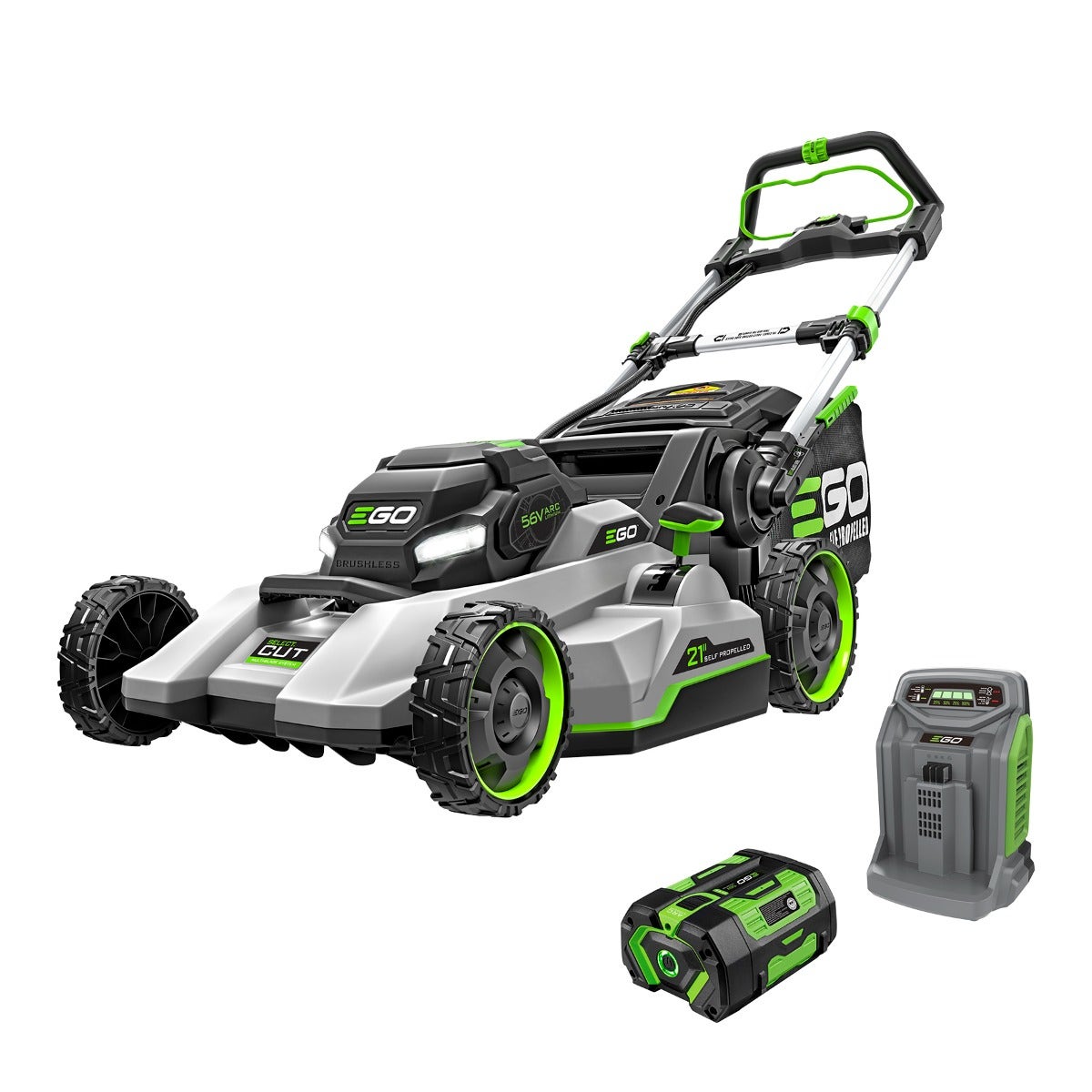
EGO LM2135SP — self-propelled starting point
This 21-inch self-propelled model is worth comparing when pushing effort matters. The linked Select Cut kit includes a 7.5Ah battery and rapid charger. Drive assistance is not a substitute for grip or control: check the mower’s manual against the measured slope and avoid wet or loose ground.
Greenworks 25322 — compact push option
The 16-inch cutting width is an option for smaller lawns where turning space matters. This is a push mower with a 4Ah battery and charger, so you provide the pushing effort. Consider it only on gentle ground that you can control comfortably and that the manufacturer permits; it is not a recommendation for steep terrain.
WORX WG779 — narrow push option
This 14-inch model uses two 20V batteries together. The linked kit contains two 4Ah packs and a charger. Its narrow format suits tight spaces, but it has no powered drive. Keep the choice to manageable lawns and check the manufacturer’s slope instructions before deciding.
Greenworks LMF414 / 2515602 — compare the self-propelled kit
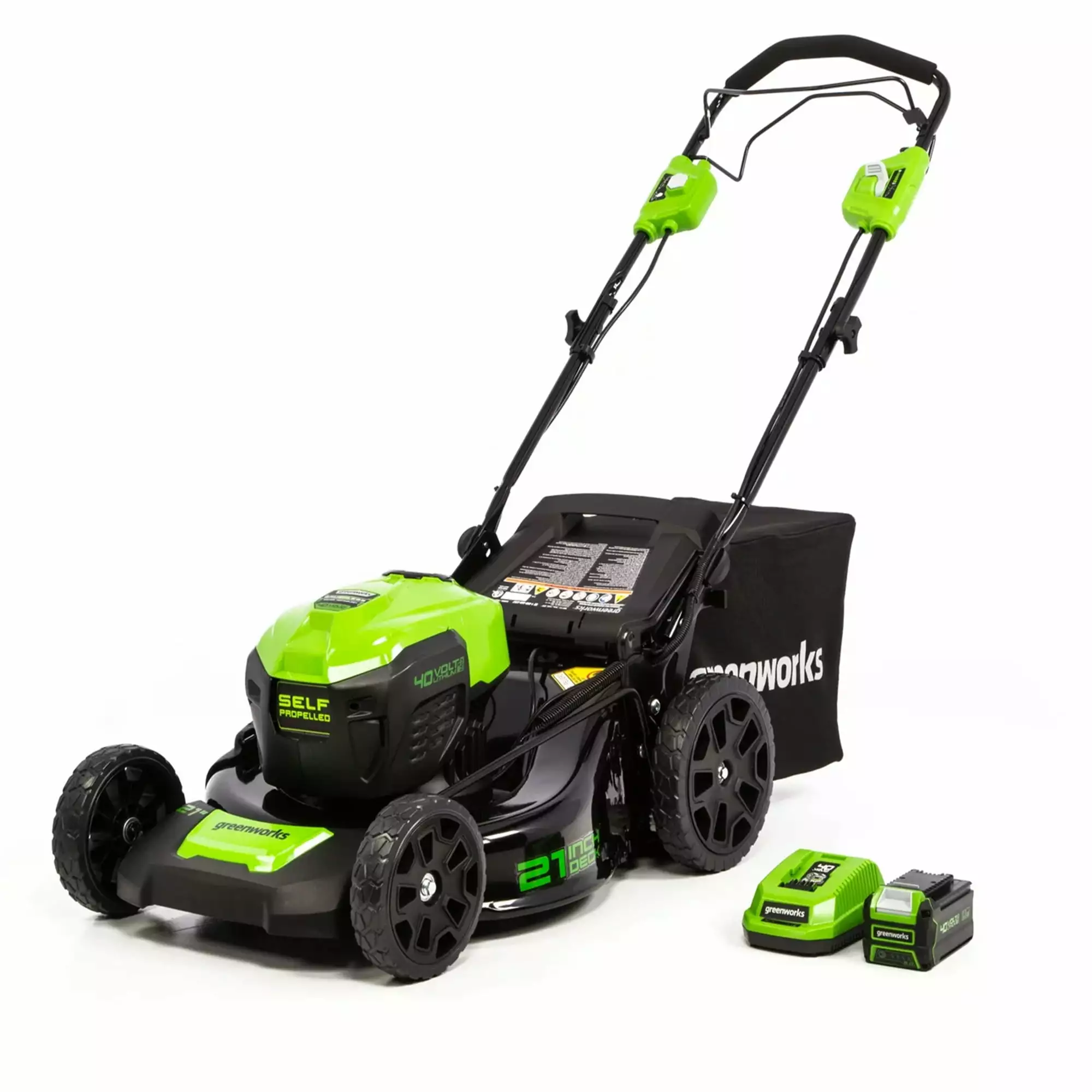
This is the specific 40V, 21-inch self-propelled Greenworks model used in this comparison. The linked kit includes a 5Ah battery and charger. Compare its weight, controls, manual and current total with the EGO option; price alone does not establish suitability for a slope.
What to look for in a lawn mower for hills
1. Self-propelled drive that feels smooth, not jumpy
On hills, predictable drive behavior matters. A mower that surges, lags, or feels awkward when you change pace can be more frustrating than helpful.
2. Manageable weight
Heavy mowers can offer stability, but too much weight becomes a liability on slopes, especially during turns, storage, and recovery if traction drops.
3. Tire grip and overall stability
Hilly mowing is not just about the blade. Good wheel grip and stable handling inspire confidence and reduce the sense that the mower wants to slide or wander.
4. Realistic fit for your slope severity
Not every mower is appropriate for steep terrain. Moderate hills are one thing; aggressive slopes, ditches, and rough uneven ground are another. Buy for the actual yard, not the easy parts of it.
5. Enough power for thicker sections
Grass on slopes can be denser, patchier, or harder to cut cleanly, especially if parts of the yard hold moisture. A mower that already feels borderline on flat grass will usually feel worse on a hill.
Who should buy a dedicated hill-friendly mower?
- homeowners whose yard includes repeated moderate slopes
- buyers who get fatigued fighting a basic push mower uphill
- people who want safer, steadier control on uneven terrain
- homeowners whose lawn regularly grows thick on sloped sections
Who might not need one?
- buyers with mostly flat lawns and only a slight incline near the street
- people with tiny easy yards where a lightweight compact mower is enough
- homeowners with terrain so steep or rough that a standard walk-behind mower may not be the right tool at all
Common mistakes when buying a mower for hills
- choosing the widest deck instead of the most controllable mower
- underestimating how tiring extra weight feels on a slope
- assuming all self-propelled systems behave equally well on inclines
- buying for dry, ideal conditions when the yard is often thicker or damp
Alternatives worth reading
- If you want more premium traction-focused options, read Best Self-Propelled Lawn Mowers.
- If you want a closer look at a premium hill-friendly cordless pick, read EGO LM2236SP Review.
- If your yard is large as well as uneven, compare with Best Lawn Mowers for Large Yards.
- If thick growth is the bigger issue than slope, watch for our upcoming guide to the best lawn mowers for thick grass.
- If you are still matching mower size to property layout, read What Size Lawn Mower Do I Need?.
Final verdict
The best lawn mower for hills is usually a controlled, confidence-inspiring self-propelled mower that fits the severity of your slopes instead of overpowering the rest of the yard. On hilly ground, comfort and control are performance features, not luxuries.
If your lawn includes regular inclines, buying for traction, balance, and manageable weight will usually pay off more than chasing the biggest deck or the most aggressive marketing claims.
Best next step: read Best Self-Propelled Lawn Mowers for the more practical category shortlist, check the EGO LM2236SP review if you want a premium cordless candidate, or use What Size Lawn Mower Do I Need? if you are still matching mower weight and deck size to your yard layout.